
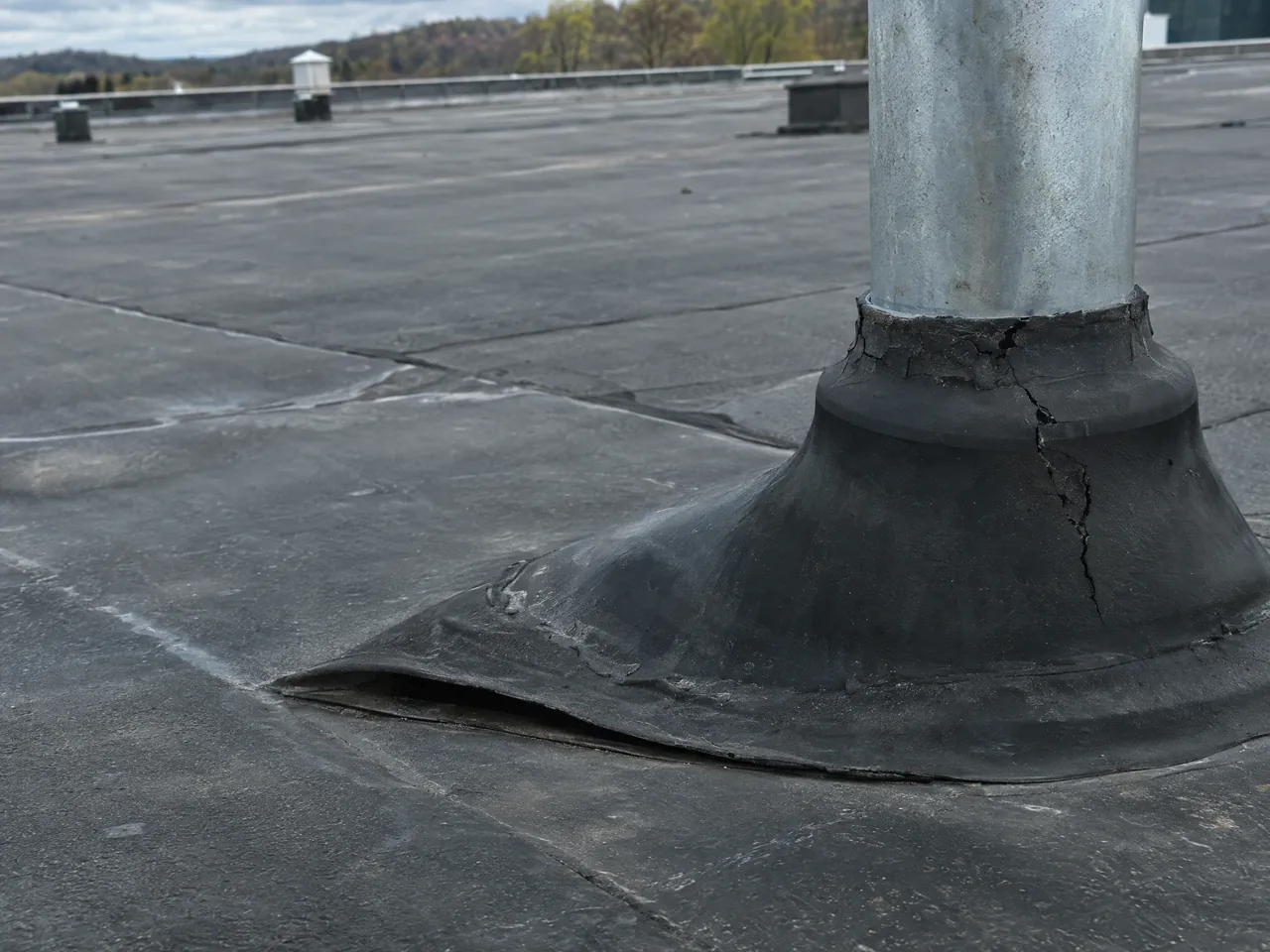
Start with the source of the problem
Water can travel before it becomes visible inside a building. The location of an interior stain is useful information, but it does not automatically identify the entry point. Leak history, weather conditions and nearby roof details help guide the investigation.
Common areas that need attention
Small details can create repeated problems when they are not addressed as part of the roof assembly.
- Open seams and damaged membrane
- Flashings at walls, curbs and penetrations
- Metal fasteners, transitions and exposed edges
- Drains, debris and areas of standing water
A repair plan with clear limits
The proposed work should describe the affected areas, compatible repair materials and any concealed conditions that may change the scope. Localized repairs can be appropriate when the surrounding assembly remains serviceable. Widespread deterioration needs a broader discussion.
From report to repair
Share where the water appears, when it happens and any recent roof work. After reviewing the property and access needs, we discuss the investigation and repair scope. Findings may point to one detail, several recurring defects or a larger assembly issue.
Occupied properties need coordination
Identify loading areas, tenant entrances and sensitive equipment below the roof. We discuss access and the work area so the repair can be planned around the building. For an active leak, call to discuss availability rather than relying on a web form for an immediate response.
When repeated patches are not enough
If the same roof keeps needing attention, compare the cost and limits of further repairs with restoration or replacement. That comparison should account for moisture, membrane condition and your plans for the property.
Keep a record of the work
Retain the repair scope, the location of treated details and any maintenance recommendations. Records make the next inspection more useful and help separate new issues from earlier repairs.